Celestial Navigation Courses
Navigation by fixing your position using angles between celestial bodies and the horizon has been around for thousands of years. Even in the age of satellite powered GPS, computer navigation systems, and advanced radio-location, determining latitude and longitude positions teaches important fundamentals of navigation, provides a back-up navigation system in emergencies, and remains a fascinating hobby.
Our navigation courses break down the learning process into manageable blocks that build on one another to cover all aspects of celestial navigation and, in the case of professional mariners, prepare them for the relevant exams.
We offer two levels for Celestial Navigation courses:
- For sail and power association members,Canadian Yachting Association (CYA), or independent mariners: Celestial 1 completely equips for all types of offshore voyages.
- For candidates for Transport Canada, Marine Safety, Certification: The second category involves Celestial 1 (Astro) and Celestial 2 (Astro Level 2). Celestial 2 consists of the advanced areas of Astro Navigation including The Sailings, required under the Marine Safety examination regulations. Astro Level 1 is available for Fishing Master certification preparation. The sight calculation device for this category is the Electronic Calculator. Marine Safety accepts the HO 229 tables.
Prior to registration we can discuss the choice of courses and methods and give you any advice you may need.
Unit by Unit description of Content of Celestial 1 is as follows. ( The Units for Celestial 2 expand on these units and includes The Sailings.)
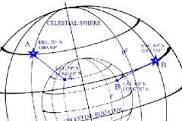
UNIT 1 - The Earth/The Celestial Sphere
- How to identify our position and that of a celestial body relative to the equator and the Greenwich meridian.
UNIT 2 - The Navigation Triangle
- How the position of a celestial body in the heavens can be established with reference to the observers horizon and meridian.
UNIT 3 - Time
- How to calculate the time at any location in the world.
- The use of time in locating a celestial body with reference to our own position.
- Using the Nautical Almanac in time calculations.
UNIT 4 - The Sextant
- How a sextant is used to measure the altitude of a celestial body above the horizon.
- Sight taking techniques in various weather conditions.
- Taking sights in your own backyard for practice and establishing the position of your house or apartment.
UNIT 5 - Latitude by Meridian Altitude
- How we obtain our Latitude (distance north or south of the equator) each day by using a heavenly bodies altitude as it passes due north or south of the boat.
UNIT 6 - Latitude by Pole Star
- How our Latitude may be found twice daily using the Pole star.
- How to set the sextant at the altitude (angle) so that the star can be quickly found.
- Using the compass to obtain direction.
UNIT 7 - The Astronomical Position Line
- How by locating the heavenly bodies position on the celestial sphere and projecting it to earth we can use it, to obtain a line of position, indicating that we are located somewhere on that line of position (LOP).
UNIT 8 - Position Lines Using the Sun by:
- HO. 229, HO. 249 and Electronic Calculator methods.
- Using pre-computed sight reduction tables or electronic calculator to find the intercept and azimuth of the sun and plotting the position line.
- Steps are laid out in a clear and concise method.
UNIT 9 - Position Lines using the Stars and Planets by;
- HO. 229, HO. 249 and Electronic Calculator methods.
- Using pre-computed sight reduction tables or electronic calculator to find the intercept and azimuth of stars and planets and plotting the position line.
- Steps are laid out in a clear and concise method.
UNIT 10 - Finding the observed position by plotting position lines from Simultaneous Star and Planet observations by:
- HO. 229, HO. 249 and Electronic Calculator methods.
- After calculating intercepts and azimuths of stars and planets, how to plot the lines of position to achieve the observed position (fix).
UNIT 11 - Finding the times of Sunrise, Sunset and Twilight using the Nautical Almanac.
- How to find the times of sunrise and sunset whether on shore or at sea.
- How to find the times of evening or morning twilight so that the best observations of stars and planets can be made to obtain a fix.
UNIT 12 - Identifying Celestial bodies using the Star Identifier and Nautical Almanac.
- Using the star identifier and nautical almanac to obtain the Azimuth and altitude of stars and planets that are suitable for obtaining our position.
- Using the star identifier to obtain a star or planets name after a quick sight has been taken in cloudy weather.
UNIT 13 - Preparations for taking sights at twilight and daytime.
- Prior to twilight, choosing stars and planets that will give the best observed position when plotted on the chart.
- Choosing the best time to take a sun observation for run up to the latitude obtained at the noon observation.
- Calculating the time the sun will be on the meridian for observation for latitude.
UNIT 14 - Observing stars, Planets, Sun and Moon to determine the Error of the Magnetic compass using HO. 229, HO. 249 or Electronic Calculator.
- How to find the compass error to ensure an accurate course to our destination is being steered by use of HO. 229, HO. 249 tables or Electronic Calculator.
- Selecting an instrument for taking accurate bearing of stars, planets, sun and moon.
UNIT 15 - A Day at Sea (on paper) taking morning, forenoon, noon, afternoon and evening sights for observed position.
- Preparing for and working sights taken at key times of the Day and evening.
- Plotting position lines to obtain our observed position. This Unit is excellent preparation for Sailing and Power Association examinations.
The Three Methods of Working Sights
1. HO. 229
A very accurate method. It is produced in a six volume series. This course uses volume 3 (Excerpts are included with the course materials). The tables are used with the Nautical Almanac to obtain elements necessary to obtain position at sea. It is a straight forward method and requires no mathematical calculation beyond addition and subtraction of degrees and minutes and decimals of minutes. A popular method.
2. HO. 249
This method is actually for Air Navigation and although slightly less accurate than HO.229, it is popular at sea because it is a quicker method and consists of only three volumes so it takes up less space on board (Excerpts are included in the course materials). As with HO.229, it is a straight forward method and requires no mathematical calculation beyond addition and subtraction of degrees and minutes and decimals of minutes. Another popular method.
3. Electronic Calculator,Casio fx991ms is the school calculator.
The fastest and is as accurate as HO.229. This method uses only three spherical trigonometric formulas in fact two of them are the same ones used for the pre-computed tables HO.229 and HO.249. Once the operational use of the calculator is learned, the formulae are easily applied by following the keying sequences given with directions for solution ( the Casio fx991ms is used by the school). A popular method, however it is wise to carry spare batteries or carry an extra calculator in case of power failure or loss of instrument. It is also wise to have a backup method such as HO.229 or HO.249.
How do I register? Fill out our Registration Form